


6 Science-Backed Reasons Running With Your Dog Changes Everything — Especially for Reactive Dogs
You already know exercise is good for your dog. But do you know why — really? And do you know that for reactive dogs specifically, a solid running routine might be one of the most powerful tools in your training toolkit?
At Noble Beast, we work with a lot of reactive dogs. Dogs who can't go to the dog park. Dogs who aren't yet ready for Camp B.A.R.K. Dogs whose owners love them fiercely but feel stuck — because so many of the usual outlets just don't work yet.
Running is different. Running is something almost any dog can do, with the right leash skills and a little preparation. And the science behind what it does for your dog — physically and behaviorally — is genuinely compelling.
Here are six science-backed reasons to lace up your shoes and take your dog with you!
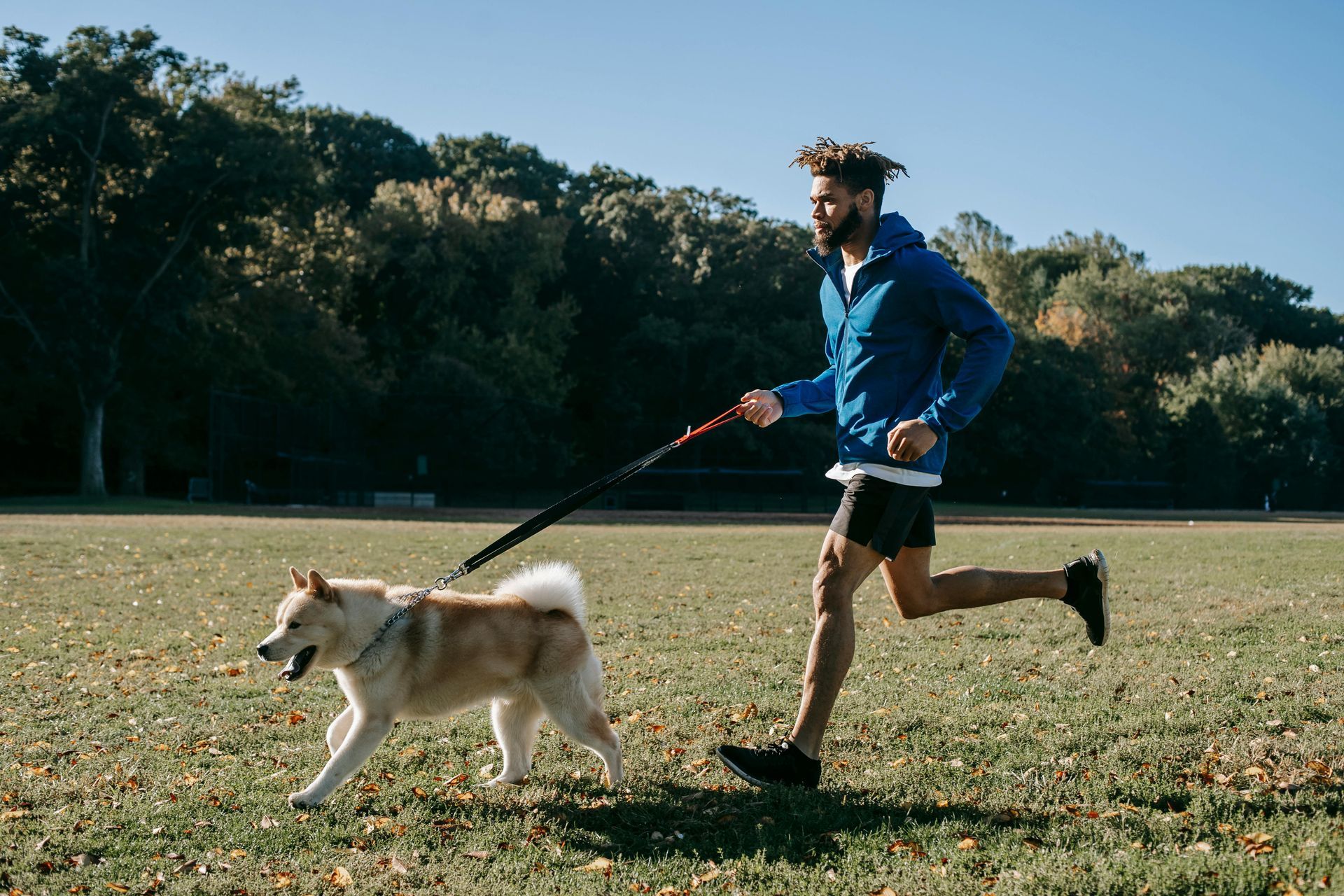
1 - Running Helps Maintain a Healthy Weight
Excess weight has the same compounding effect on dogs as it does on humans — shorter lifespan, increased disease risk, and reduced mobility. Research published in the Canadian Veterinary Journal found that even severely obese dogs were able to lose approximately 19% of their body weight over three months with mild exercise and a controlled diet.
The takeaway for your dog: you don't have to start big. A consistent daily walk that gradually builds into a run is enough to make a meaningful difference. Progress over perfection every time.
Noble Beast note: If your dog pulls on leash or reacts to other dogs on walks, our Wonderful Walkers class and Prickly Pooch series are both designed to help you build the leash skills that make running together actually enjoyable.
2 - Running Reduces Anxiety — Including Separation Anxiety
This one surprises a lot of dog owners. Researchers studying the relationship between exercise and anxiety in dogs found that dogs who received daily exercise were less sensitive to noises and showed significantly less separation anxiety than dogs who didn't.
For reactive dogs especially, this is huge. A dog who is physically tired and mentally satisfied is a dog whose nervous system is running at a lower baseline. Lower baseline means less reactivity. Less reactivity means more progress in training. It's a virtuous cycle — and running is often where it starts.
3 - Running Reduces the Likelihood of Behavioral Problems
A landmark survey covering twelve dog shelters found that behavioral issues were the number one reason owners surrendered their dogs. Not aggression. Not illness. Behavior.
The connection to exercise is direct: a mentally engaged and physically tired dog is dramatically more ready to focus, learn, and make good choices. Training works better on a tired dog. Calmness comes more naturally to a dog whose energy needs have been genuinely met.
If your dog is bouncing off the walls, destroying furniture, or struggling to settle — before anything else, ask honestly: is this dog getting enough physical exercise every single day?
4 - Running Is Good for Your Dog's Heart
A study published in Circulation Research found that dogs who exercised regularly — approximately two hours per day — showed significantly better cardiovascular health, including more effective vasodilation, than dogs who didn't exercise.
A healthy heart means better endurance, better recovery, and better overall quality of life. And the cardiovascular benefits compound over time — the more consistently your dog exercises, the greater the long-term return.
5 - Regular Exercise Protects Against Future Injuries
This one often surprises people. Research published in the American Journal of Physiology found that dogs who exercised consistently — even dogs recovering from ligament repairs — had stronger ligaments and higher collagen levels than dogs who were sedentary.
Translation: regular running doesn't wear your dog's joints out. Done at an appropriate level for your dog's age and fitness, it actually makes them more resilient. A dog who moves consistently is a dog who moves better for longer.
As always — start slowly and build gradually. If your dog has a history of orthopedic issues, check with your vet before starting a running program.
6 - Running Supports a Stronger Immune System
Veterinarians consistently recommend regular exercise as a contributor to a robust immune system. Exercise regulates fat levels, supports healthy hormone production, and reduces the body's inflammatory response — all of which contribute to better immune function. For senior dogs especially, consistent exercise can meaningfully reduce the likelihood of illness and support overall quality of life well into their older years.
A Note on Leash Skills — Because Running Only Works If the Walk Does
All of this is only possible if your dog can actually run with you — calmly, safely, and without turning every other dog sighting into a crisis.
If your dog pulls, lunges, or reacts on leash, start there. Our Wonderful Walkers class is specifically designed to transform leash manners in just a few sessions. Our Prickly Pooch Class Series addresses reactivity directly — building the skills your dog needs to move through the world without being overwhelmed by it.
And if your dog isn't yet ready for group classes,
Private In-Home Training is a wonderful place to start. We'll come to you, work in your actual neighborhood, and build the leash skills that make all of this possible.
Frequently Asked Questions
- How much exercise does my dog need every day?
It depends on breed, age, and health status — but most adult dogs benefit from at least 30 to 60 minutes of moderate exercise daily. High-energy breeds like Border Collies, Vizslas, and working dogs often need significantly more. When in doubt, ask your vet for a recommendation specific to your dog.
- My dog is reactive on leash. Can we still run together?
Yes — but start with the leash skills first. A reactive dog on a run is a stressful experience for everyone. Our Wonderful Walkers and Prickly Pooch classes build exactly the foundation you need to make running together safe and enjoyable. Many of our Prickly Pooch graduates go on to run regularly with their owners — it's one of our favorite outcomes to hear about.
- Is running safe for puppies?
Not until growth plates have closed — typically around 12 to 18 months depending on the breed. High-impact repetitive exercise too early can damage developing joints. For puppies, focus on free play, socialization, and short walks. Ask your vet when your specific puppy is ready for more structured exercise.
- What if my dog has never run before?
Start exactly where you are. Begin with brisk walks and gradually introduce short running intervals. Let your dog set the pace initially. Build duration and intensity slowly over weeks — not days. A dog who has been sedentary needs the same gradual buildup a human would.
- My dog gets tired quickly but seems to want more. What's happening?
This is common in dogs who are out of shape or in high heat. Watch for heavy panting, lagging behind, or lying down mid-walk — these are signals to stop and rest. Always bring water. Exercise in the early morning or evening during Denver's hot summer months to avoid heat-related issues.
Noble Beast Dog Training has been Denver's relationship-first training company for 18 years.
We are one of Denver's 110 Legacy Businesses and the only dog training company on that list.
📍 4335 Vine Street, Denver, CO 80216 | 📞 (303) 500-7988
Ready to make running with your dog a reality?
The foundation for every great run starts with solid leash skills. Noble Beast has been building those skills with Denver dogs for 18 years — and we'd love to help yours.
- Learn about Wonderful Walkers → www.noblebeastdogtraining.com/wonderful-walkers
Is reactivity getting in the way? Our Prickly Pooch Class Series addresses exactly that.
- Learn about Prickly Pooch → www.noblebeastdogtraining.com/enroll-in-a-prickly-pooch-class
Want ongoing support for every stage of your dog's journey?
Becoming Noble is our private online community — certified trainer access, Speaking Dog AI behavior guide, and a warm welcoming community of Denver dog owners who get it. Explore Becoming Noble → www.noblebeastdogtraining.com/BecomingNoble