


What Prong and E-Collar Training Is Teaching Your Dog
When Compliance looks like Training
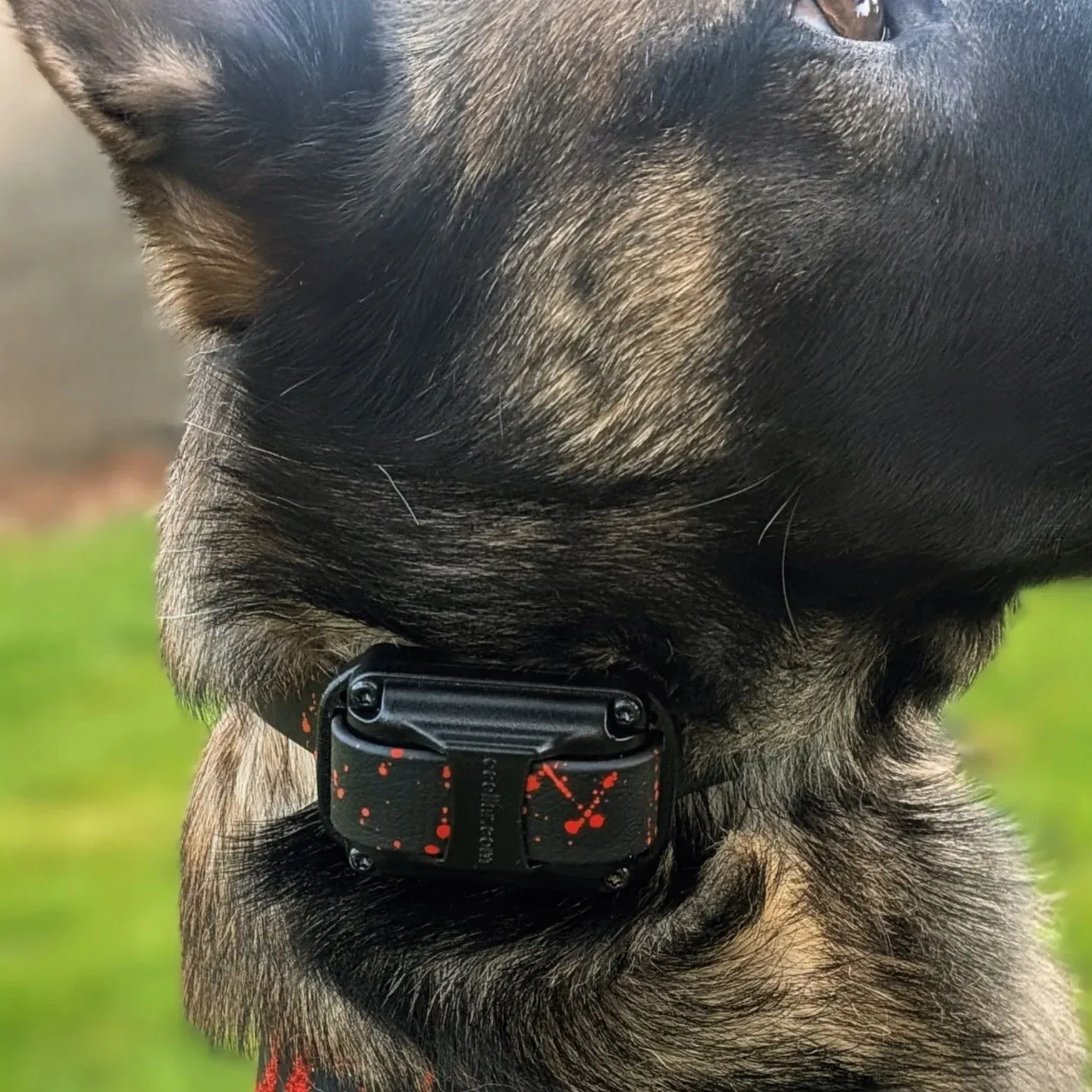
There is a conversation happening right now about aversive dog training,
shock collars, prong collars, and what constitutes humane treatment of dogs.
But I want to move beyond the emotional reaction to these tools for just a moment.
Because I think dog owners deserve to understand something much more important:
What is the dog actually learning?
One local Denver training company published an educational video explaining exactly how they introduce prong collars and electronic collars to dogs. I appreciate the clarity of that explanation because it gives us an opportunity to examine the methodology itself rather than speculate about how these tools are being used.
And when you break down what is being taught, the philosophy becomes remarkably clear.
First - the dog learns how to make pressure stop
The training begins with a prong collar.
The trainer explains that they pull the prong collar in a direction and when the dog follows that pull and does what is being asked, the pressure stops. This is the beginning stages of the dog learning that compliance makes the uncomfortable sensation disappear. In the trainer's own explanation, the dog learns that how they “get rid of it” is dictated by their behavior.
In behavioral science, there is a name for this: Negative reinforcement. “Negative” does not mean bad, and “reinforcement” does not mean reward. Negative reinforcement means an unpleasant or aversive sensation is subtracted or removed when the desired behavior occurs, making that behavior more likely to occur again.
In very simple terms - Pressure happens → the dog performs the desired behavior → pressure stops.
The dog learns how to control the discomfort.
Then that lesson is transferred to the electronic collar
- Once the dog understands this process through the prong collar, the trainer explains that the electronic collar is layered into the same learning sequence.
- They find a "stimulation level high enough that the dog is going to want to get rid of it, but not so high that the dog cannot process what is happening."
- The trainer applies leash pressure AND electronic "stimulation", the dog performs the requested behavior, and “all that pressure goes away.”
- Again - Pressure/shock → desired behavior given → relief.
- Eventually, according to their explanation, the electronic collar also becomes something the dog understands as "meaning: stop doing what you're doing", although without teaching the dog what we expect from them - it leaves the dog guessing until the dog can actually corelate the "stimulation" with the action they are doing or not doing.
- At that point, we are no longer talking only about negative reinforcement, we are talking about positive punishment — adding an aversive or uncomfortable/painful consequence to decrease behavior - and the trainer is extremely truthful and direct about their process.
- He specifically states that to “get the most” out of the training, the electronic collar sometimes needs to be high, punitive and uncomfortable - That distinction matters, because electronic collars are frequently described to dog owners simply as communication:
- A tap.
- A nudge.
- A vibration.
- Something comparable to getting someone's attention.
But if the sensation must sometimes be uncomfortable enough that the dog actively wants to make it stop, we should be honest about what is creating the behavior change. The dog is learning that compliance controls discomfort. Are they really being nudged or tapped? Of couse not, that is why the collar has to be high, punitive, and uncomfortable.
Now let's talk about fearful, anxious and reactive dogs
This is where I become particularly concerned...
Using pressure to force compliance with even a simple behavior like “sit” has its concerns.
Applying that same methodology to fear, anxiety, reactivity and aggression raises the stakes considerably.
In the video, the trainer specifically discusses using higher electronic-collar levels with dogs displaying intense behaviors, including anxious, fearful and aggressive dogs. They also explain that when a dog is walking in heel, deviations from that position can include sniffing, inching forward or lunging at another dog — and that all of these are met with corrections... or, uh - shocks.
But a dog sniffing the grass and a frightened dog lunging at another dog are doing those things for very different reasons:
- A dog sniffing the grass is a natural behavior and they may simply want to investigate something interesting - or find a potty spot.
- A dog lunging at another dog may be literally be so terrified that they become extremely defensive. Have you ever heard the saying 'A good offense is the best defense'?
Not only is the dogs actionable behaviors different, but more importantly...
the emotional and behavioral function underneath it is completely different too!
Yet they get "corrected" for both the same way.
Good quality behavior work asks a different question, not simply:
How do I stop this behavior?
BUT
Why is this behavior happening?
Behavior is information:
A growl is information.
A lunge is information.
Avoidance is information.
Barking is information.
Freezing is information.
Sniffing is information.
Wanting to explore is information.
A tail wag in all its variations is informtion.
When we punish the behavior without addressing WHY it's happening, the outward behavior may disappear — but it does not mean that the fear, anxiety or other emotion driving the behavior has disappeared. When a dog growls, barks or lunges, they are warning us that something is wrong for them. If we punish those warnings, the dog learns to stop showing those warning signs — now we have a dog who bites with little or no warning, making them MORE dangerous to people and other dogs.
And let's talk about SNIFFING. Sniffing is NOT a misbehavior — it's one of the primary ways dogs experience their world, and is hugely enriching, soothing and stress-relieving. Correcting a dog simply for moving out of heel to sniff can actually take away something that actually helps them regulate while adding MORE stress.
Imagine a walk where you aren't allowed to stop, explore or look at anything that interests you without being punished. Now imagine being a dog designed to experiences the world through your nose - like we do with sight, who lives in an apartment and waits 8 hours a day just to get out on that very exciting outdoor excursion - only to be able to walk right next to their owner the whole time.
Training should help our dogs navigate our world — not take away their freedom to experience theirs.
A quieter dog is not necessarily a less fearful dog
This distinction is incredibly important.
If a dog sees another dog and begins becoming aroused or uncomfortable, and we "correct" that dog by adding an uncomfortable consequence (positive punishment) before barking or lunging occurs, we may absolutely reduce the outward behavior. The dog may stop lunging, barking, growling - and walk beautifully beside us, and from the outside looking in, that can look like tremendous success!
But there are two separate questions we need to ask:
What is the dog doing?
AND
What is the dog feeling?
Those aren't always the same thing:
- Stopping the expression of fear does not automatically eliminate fear.
- Stopping a growl does not automatically make a dog feel safe or be safe.
- Creating obedient compliance around a trigger, does not necessarily change the dog's emotional association with that trigger and can make it worse - "Every time I see a dog I get shocked - I really really really dislike dogs"
This is one of the places where suppression can easily be mistaken for behavior success.
Their own explanation reveals this distinction
Later in the video, the trainer gives an example of a German Shepherd who is lunging, attempting to bite people and displaying severe aggression toward dogs.
What happens after training?
Interestingly, the trainer says "the underlying “desire” will still be there — but the behavior becomes more manageable."
But if the underlying fear, anxiety or desire to react is still there, what happens when the shock collar comes off? Dogs will learn the difference between when they're wearing a training collar and when they're not. If the collar is what is stopping the behavior — rather than actually addressing WHY the behavior is happening or the root of the emotion — what happens when that consequence is no longer there?
That said, the trainer's statement does deserve attention, because management is not inherently bad. In fact, management is an enormously important part of responsible behavior work - often the first step in a good training plan of action.
If a dog might bite someone, we absolutely manage the environment while we work on the underlying behavioral and emotional problem. If a dog is reactive, we prevent situations where that dog is repeatedly pushed beyond their threshold.
But here's the important distinction:
In this case, what is actually managing the dog's behavior — the owner, or the shock collar?
If the dog's behavior is only "manageable" because the collar is there to correct them when they react, the tool is doing the managing. The owner hasn't necessarily learned how to recognize the dog's triggers, prevent problems, help the dog feel safer, or change the emotions driving the behavior.
And that brings us right back to the question: What happens when the collar isn't on?
Safety matters.
As well, management, suppression and emotional rehabilitation are not interchangeable concepts:
- A dog can stop lunging and still be afraid.
- A dog can comply and still be uncomfortable.
- A dog can become quiet and still be emotionally struggling.
This training method often makes the problem LOOK better without actually helping the dog feel better. The behavior is still rooted in the dog.
Wouldn't we rather have a dog become less reactive because we've addressed the fear driving the reactivity? A dog who looks forward to direction because we've helped them feel safe? A dog who becomes calmer because they genuinely ARE calmer — not because they've learned there are consequences for showing us how they feel?
The goal shouldn't be to silence the symptoms. It should be to help heal what's causing them.
Compliance is not the same thing as emotional safety.
But don't e-collars work?
This is where this conversation needs some intellectual honesty.
- Can punishment change behavior?
- Of course it can. If punishment couldn't change behavior, humans wouldn't have been using it on each other for thousands of years — let alone on animals.
- Can an electronic collar make a dog stop doing something?
- Yes. In the same way we might not touch a hot stove after getting burned.
- Can a prong collar create beautiful leash behavior in a dog?
- Yes. In the same way we learn to avoid movements that cause us pain.
- Can a dog trained with these tools appear happy, play, cuddle with their owners and live otherwise enjoyable lives?
- Of course. Happiness isn't all-or-nothing. A dog can love their owner, enjoy their life, play and cuddle — and still experience fear, stress or pain from the way they are trained.
And this is where I think both sides of the dog-training debate sometimes lose credibility by overstating their positions.
So I want to be extremely clear
I would not say science proves every dog trained this way will become fearful, aggressive, shut down, or emotionally damaged.
It doesn't.
I would say science proves we can EQUALLY and SUCCESSFULL train dogs WITHOUT using pain, fear, intimidation, or discomfort
— so why CHOOSE methods that cause fear, pain or discomfort and potentially put their emotional well-being at risk?
Research comparing electronic-collar training with reward-focused training has found that dogs can achieve equal or better training outcomes without electronic stimulation. Professional veterinary behavior organizations, including the American Veterinary Society of Animal Behavior, recommend reward-based training methods and advise against aversive methods such as electronic and prong collars because of the associated welfare risks and risks to other animals and people when warnings are suppressed.
The question therefore isn't simply - Can these tools work? Clearly they can change behavior.
The better question is....
If we can teach a better behavior without creating pain, fear or discomfort,
why would we choose any method that requires it?
“But my dog knows how to turn it off.”
This argument deserves examination too.
The trainer explains that dogs don't shut down because they are “carefully taught” how to make the electronic stimulation stop. The dog learns that its own behavior determines whether the pressure/shock continues, but knowing how to stop an aversive experience doesn't make that experience pleasant or without added stress. In fact, wanting the painful sensation to stop is precisely what makes the training mechanism work. The dog changes their behavior because they want the discomfort to stop. And although there are plenty of dogs who experience lasting emotional harm from this kind of training, it is also true that not every correction causes lasting emotional harm to every dog.
BUT it does mean we should describe the mechanism honestly.
The dog isn't simply receiving information
The dog learns to comply in order to escape the discomfort.
The trainer describes dogs as being “carefully taught” how to make the shock stop - but carefully taught WHAT exactly?
The dog isn't first taught the behavior we want and then asked to perform it. The dog experiences the shock and has to figure out which behavior makes it stop.
That's not carefully teaching a behavior. It's making the dog guess how to escape discomfort.
And when the collar is used to correct multiple behaviors, the dog may have to make those associations again and again. Imagine repeatedly being punished without first understanding what you're supposed to do instead. It would basically shut you down, and leave you focused on only a handful of behaviors to keep yourself safe - shutting you down. That kind of guessing creates stress, uncertainty and anxiety — the exact opposite of how we want a dog to feel while learning. Again, they may look ok and in good behavior - but are they really?
If research shows we can teach dogs what we WANT them to do without pain,
why would we make our dogs experience pain first and figure it out for themselves?
And this brings us to something much bigger than dog training
We are responsible for our dogs. They don't get to choose their trainers, the tools they are trained with, or the methods used to teach them.
We make those choices for them.
And with that comes an enormous responsibility.
How would you want to be treated if you were even slightly confused, afraid, or didn't understand what was being asked of you?
When your dog is afraid, confused, overwhelmed or struggling, who do YOU want to be in that moment?
- Do I want to be someone they obey because they are afraid of what will happen if they don't, regardless of them associating the shock or pain with me?
- Or do I want to be someone they enjoy being in partnership with because experience has taught them that we work through things together, I will keep them safe, and I will always choose the Least Intrusive, Minimally Aversive (L.I.M.A.) approach I can in any given situation?
This doesn't mean our dogs never hear “no.” It doesn't mean there aren't boundaries, expectations or consequences. And it certainly doesn't mean dangerous behavior is ignored.
Relationship-based training isn't permissiveness.
We can have boundaries AND compassion.
Expectations AND emotional safety.
Structure AND trust.
In fact, I believe the best dog training requires all of them, because ultimately, we're not just deciding how we want our dogs to behave.
We're deciding who we want to be in their lives — and how we can build a life together that enriches both of us.
Dogs make humans more human
This is the piece I wish we, as dog owners, talked about more. Dogs don't simply need us to teach them how to exist conveniently in our world.
They teach us something too. They ask us to become better observers. More patient teachers. Clearer communicators. More compassionate leaders. They force us to recognize that another living being can experience the world completely differently than we do — and that their experience still matters. That is just ONE extraordinary gift we receive when sharing our lives with dogs.
Dog training should not just ask:
How do I get my dog to do what I want?
It should also ask:
What kind of human am I becoming in the process?
Because our dogs cannot choose the methods used to train them.
They cannot research trainers. They cannot read reviews.
They cannot tell us what happened while we weren't there.
They cannot say, “I'm doing what you're asking, but I'm still afraid.”
We choose for them.
As mentioned before - with that privilege comes ENORMOUS responsibility.
So before choosing a trainer — particularly for a dog struggling with fear, anxiety, reactivity or aggression -
don't just ask whether they can make the behavior stop.
- Ask how.
- Ask what happens when your dog gets it wrong.
- Ask what tools will be used.
- Ask what those tools are intended to make your dog feel.
- Ask how your trainer differentiates behavioral suppression from emotional change.
- Ask how they measure whether your dog actually feels safer rather than simply behaves differently.
And perhaps most importantly, ask yourself... What kind of relationship do I want to create with my dog?
Do I simply want a dog who complies? Or do I want a dog who feels so safe, secure and connected to me that they can move through this world with confidence — knowing I will guide them, protect them and never intentionally cause them unnecessary fear or pain?
I want the inner puppy in every dog to keep shining through — whether they are 6 months old or 16 years old.
That playful, curious, joyful part of them that feels safe enough to explore the world, make mistakes, communicate openly and simply be a dog.
That kind of relationship isn't built through forced compliance. It's built through trust. It's built through security. It's built through partnership. And ultimately, the way we choose to train our dogs doesn't just shape their behavior.
It shapes US, the relationship they get to have with us, and the life they get to experience beside us.