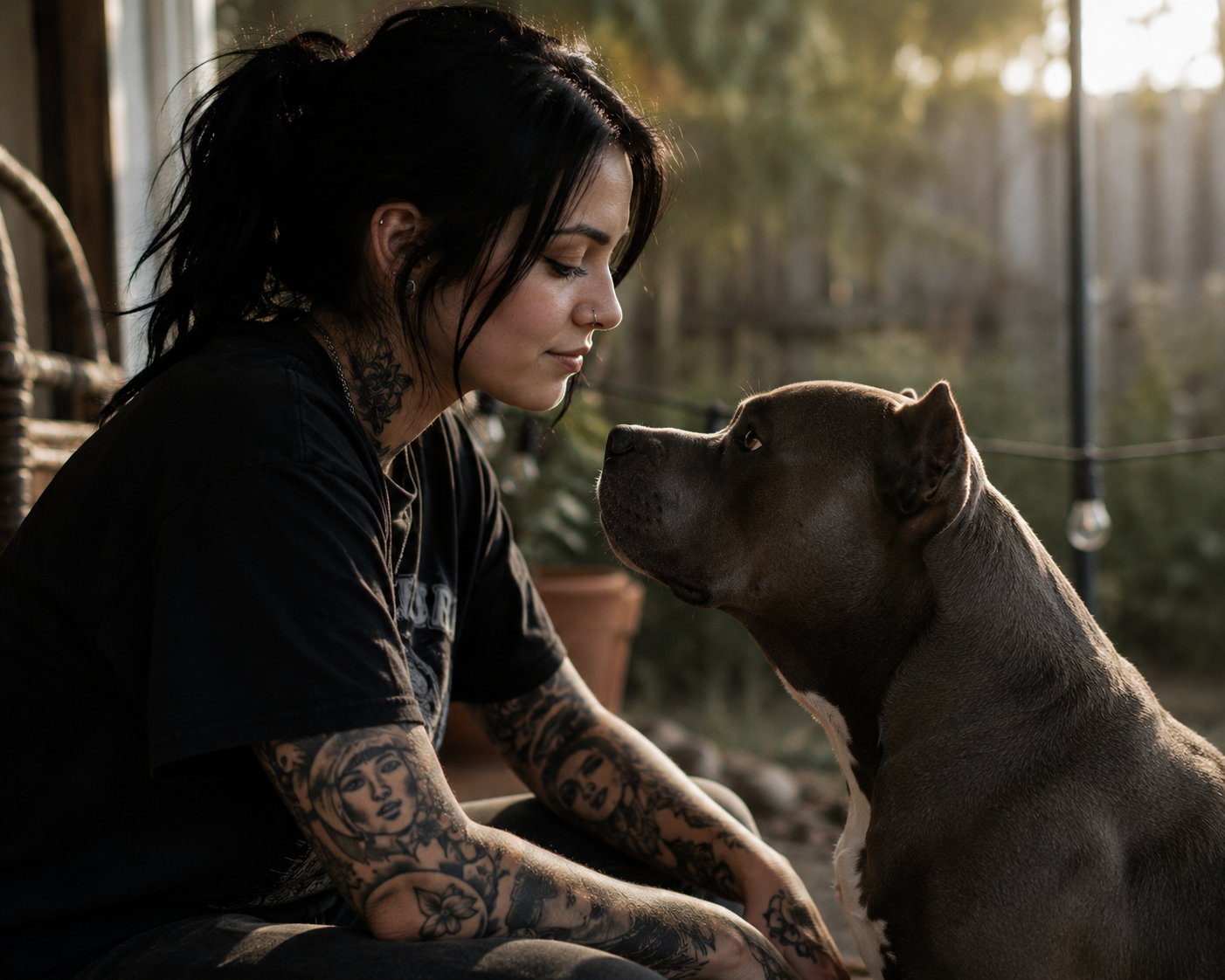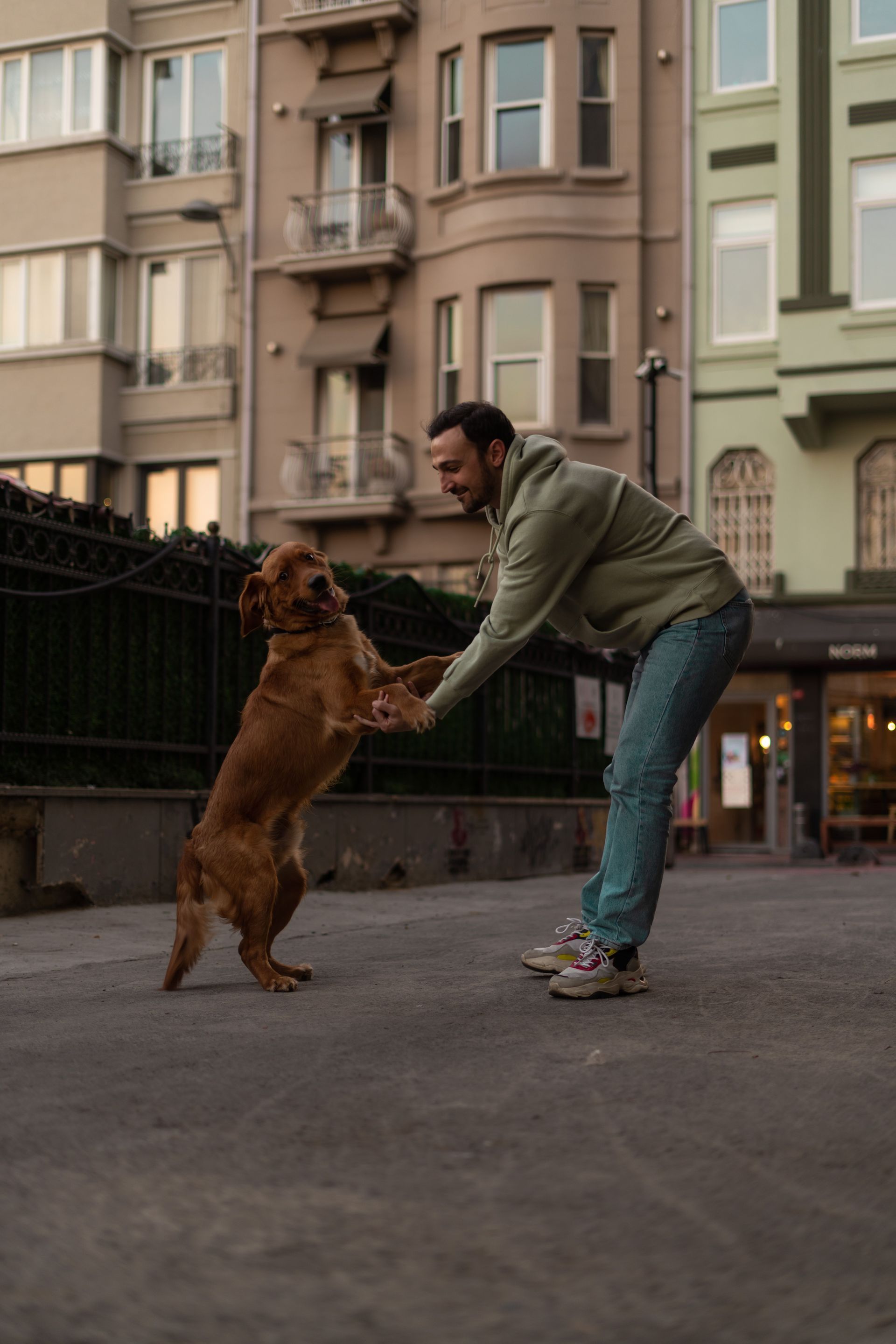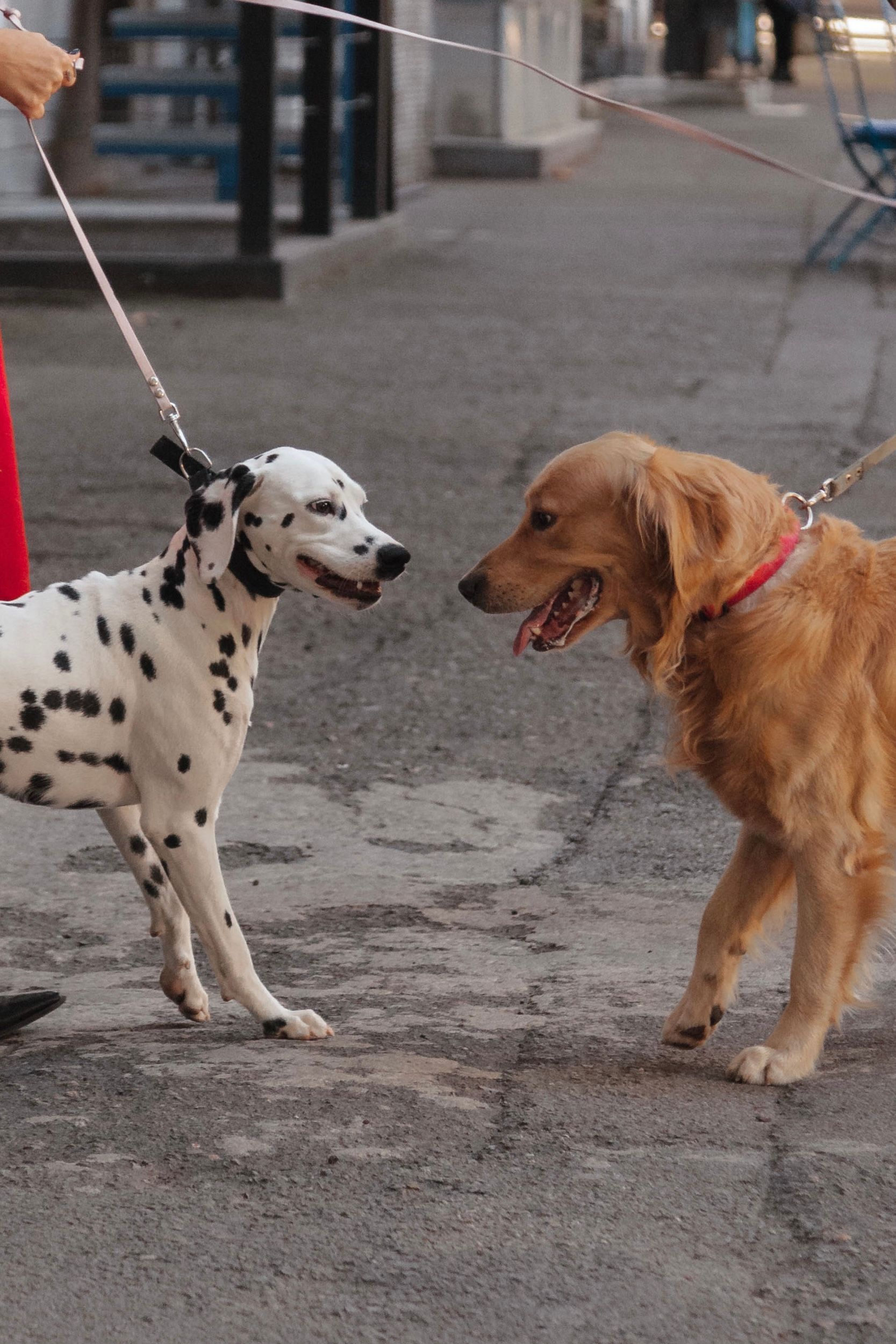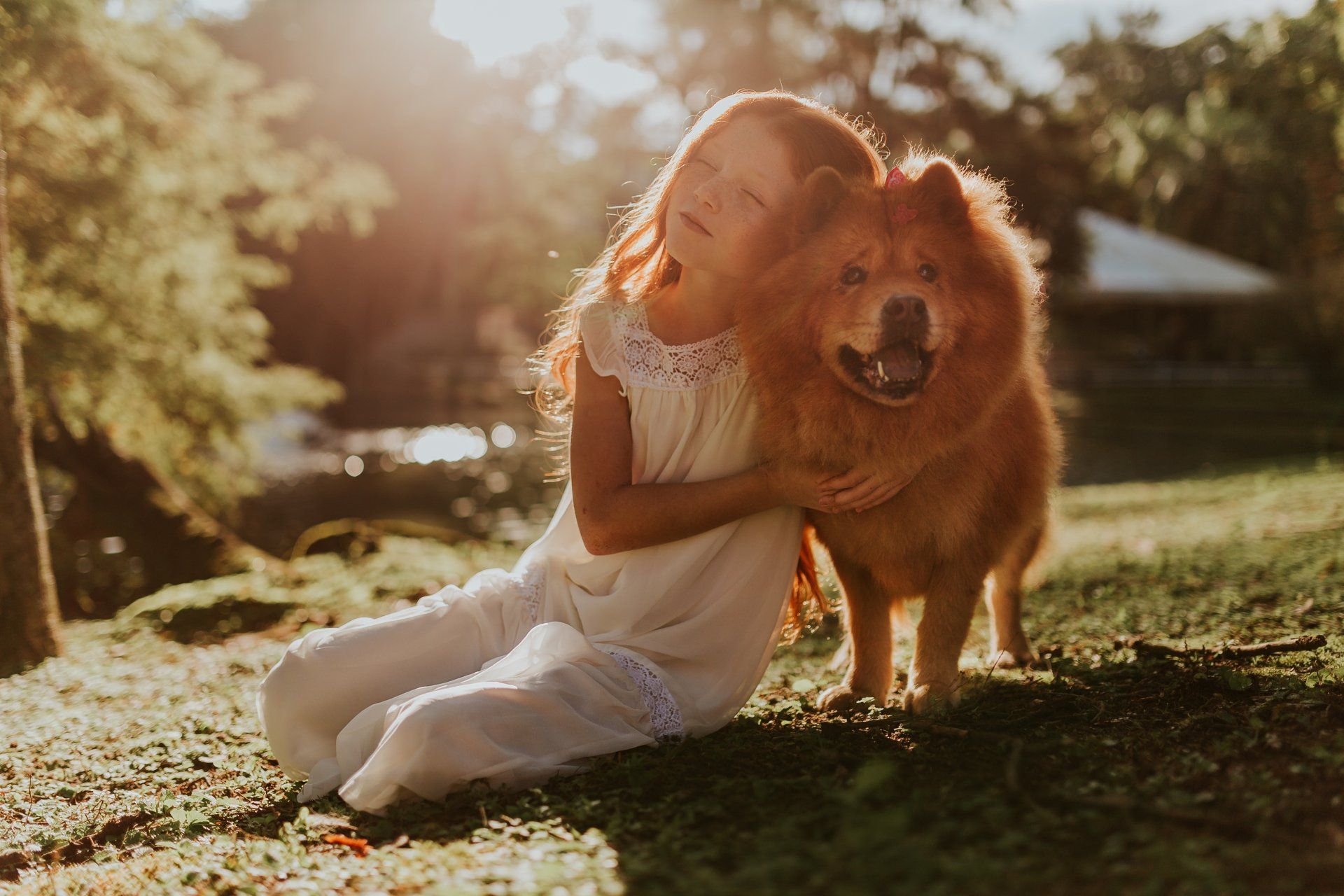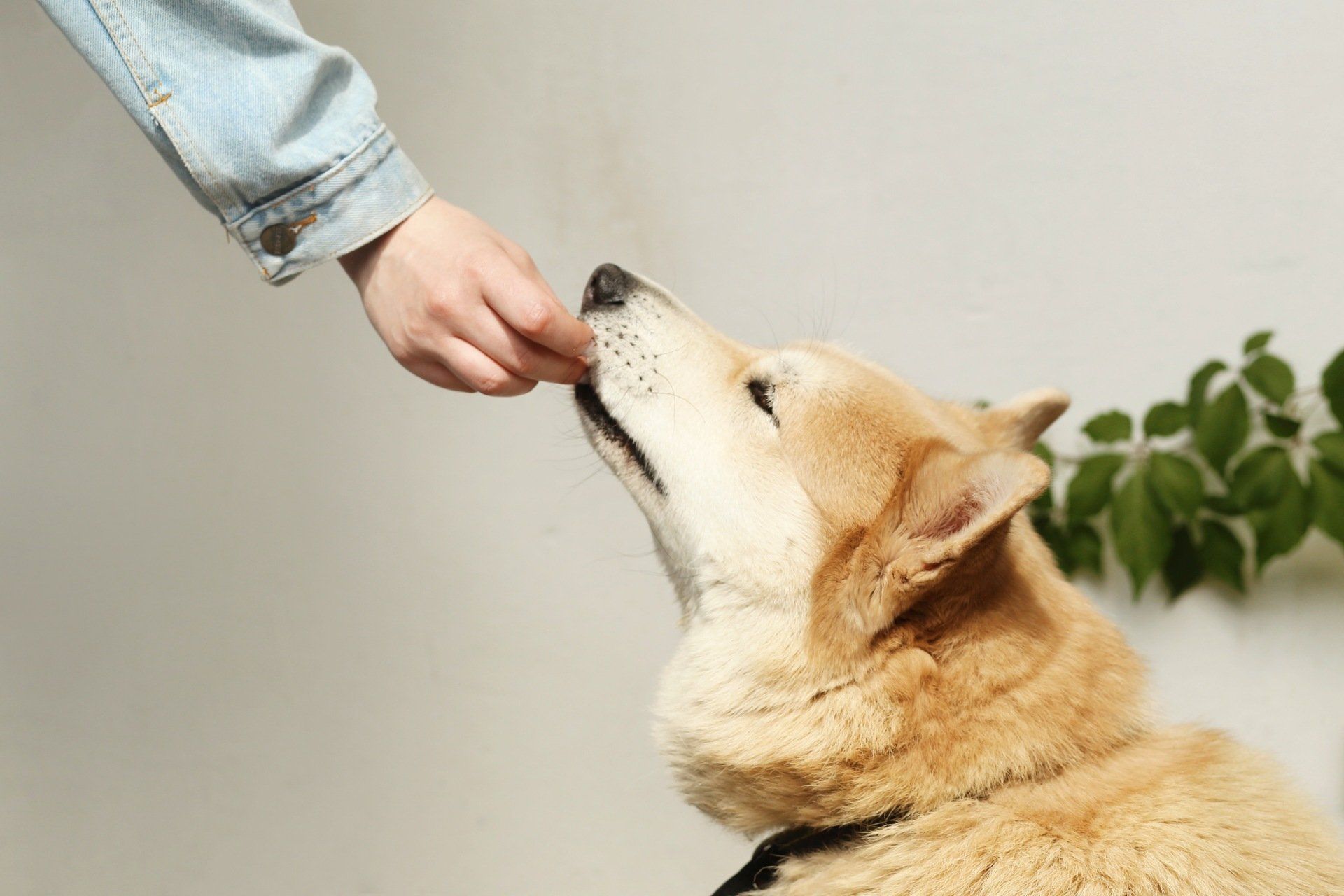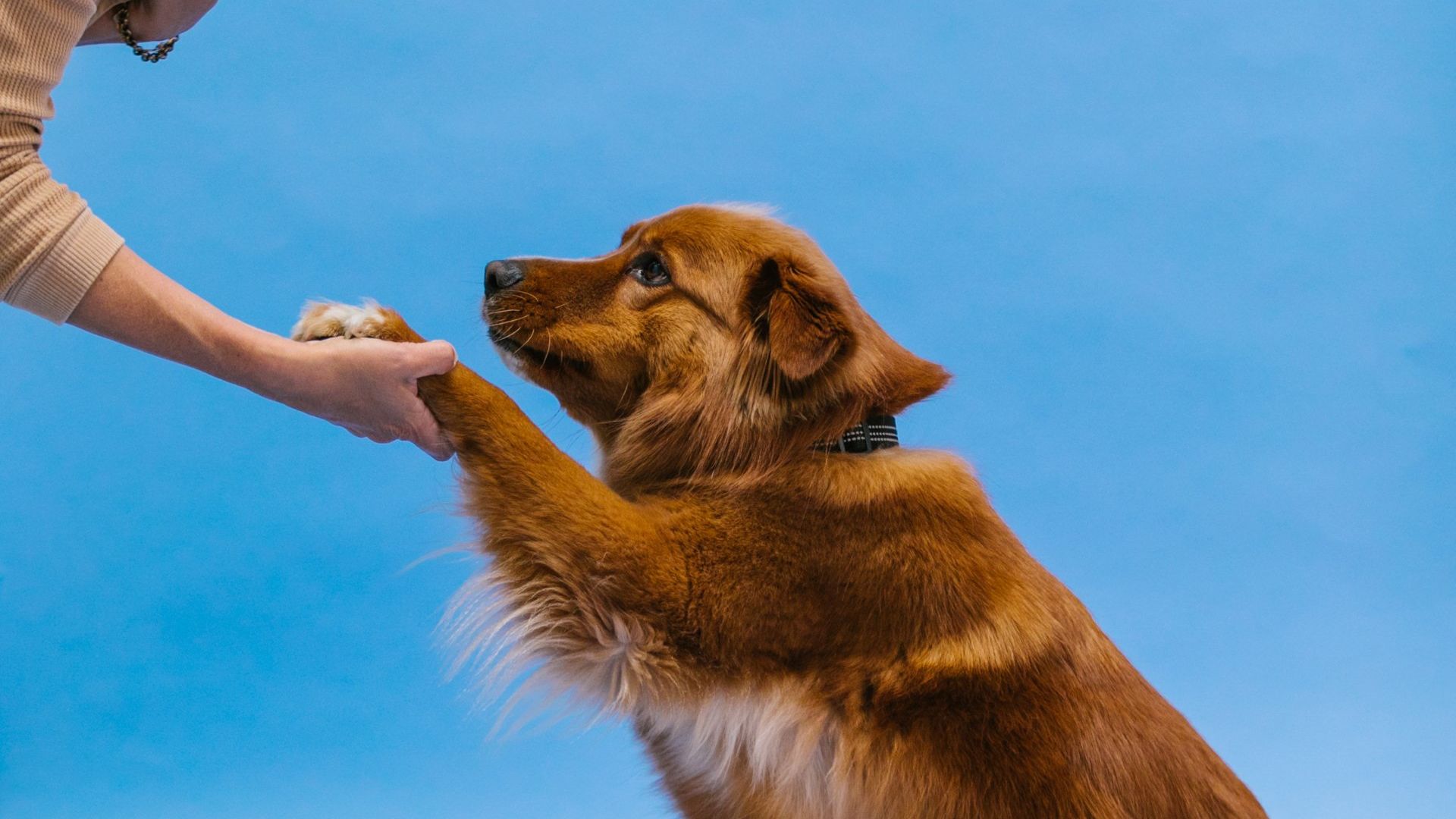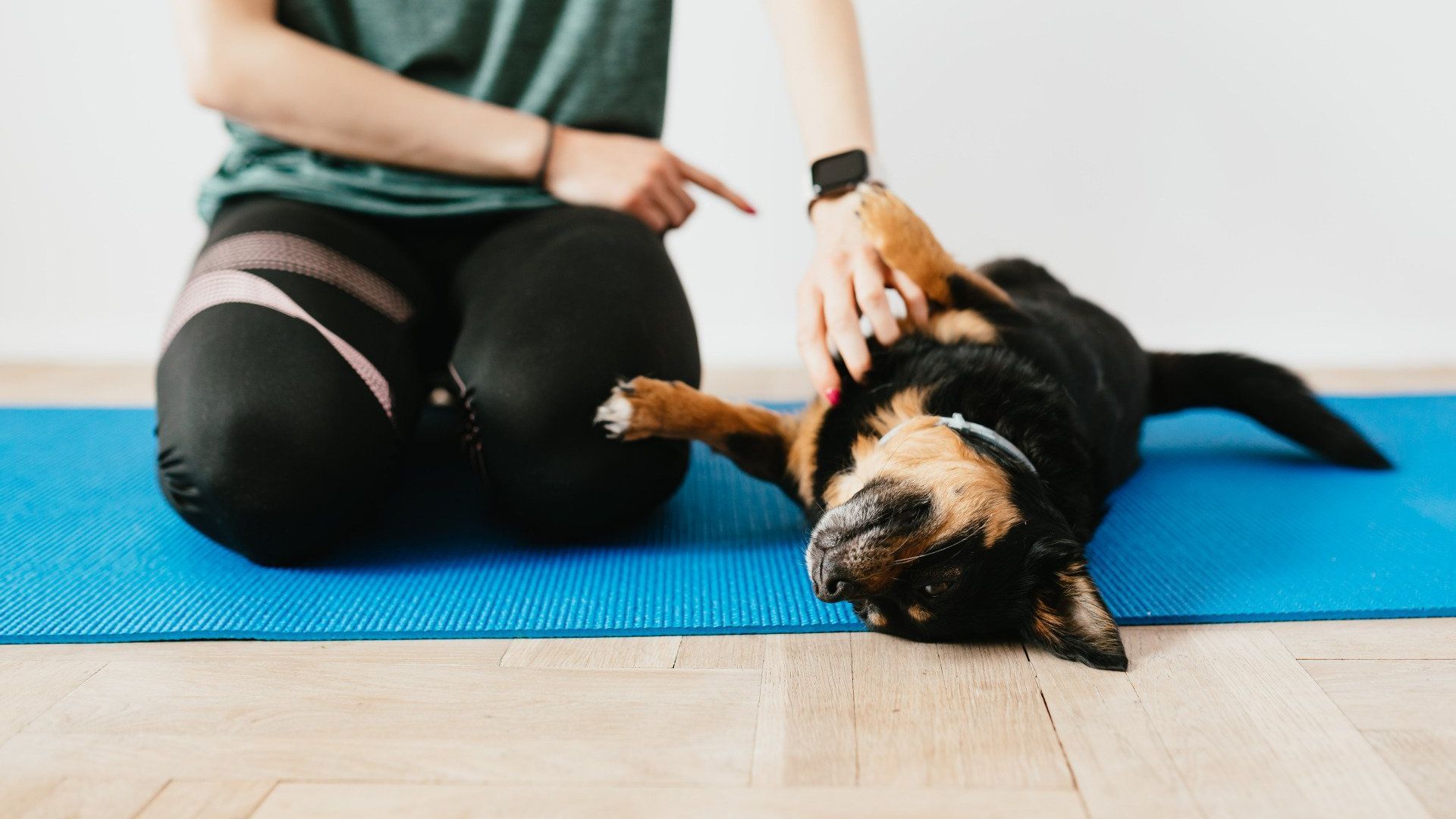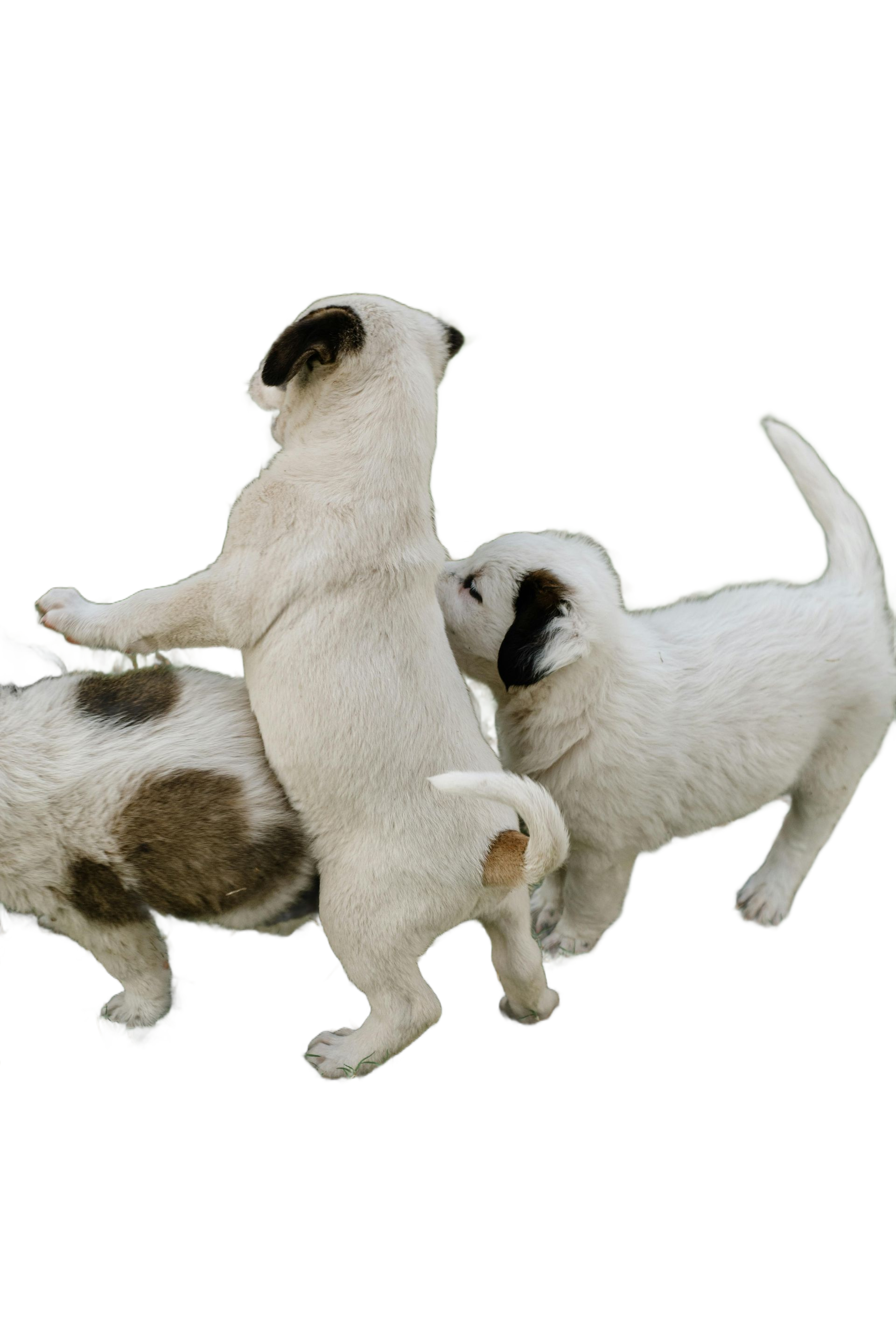



Your Dog Isn't Being Stubborn — Something Else Might Be Going On
Mood vs. Emotion vs. Attitude in Dogs: What Every Owner Should Know

You've probably said it before: "My dog is in a mood today."
And here's the good news — you were probably right. You were reading your dog. That instinct to notice when something is off? That's not you being dramatic. That's you paying attention, and it's one of the most valuable skills a dog owner can have.
Maybe you've also noticed your dog seems genuinely afraid of the vet — not just in the moment, but every single time, starting in the parking lot. Or that your dog gets the zoomies for exactly 30 seconds after dinner and then it's over, like nothing happened.
These are three very different things happening inside your dog. And after 18 years of training Denver's dogs — and loving Denver's dog owners just as much — we can tell you that understanding the difference changes how you train, how you respond to behavior struggles, and how you show up on your end of the leash.
Psychologist Paul Ekman spent decades studying how humans experience emotions, moods, and attitudes as distinct psychological states. It turns out this framework applies beautifully to dogs — with a few important caveats. Let's walk through it together.
What Are Emotions in Dogs?
Emotions are brief, intense reactions to something specific. They come on fast, they involve the whole body, and then they pass — like a wave rolling through.
Your dog hears the leash jingle — instant joy. A stranger reaches over their head — instant fear. The mailman appears — instant arousal (and possibly a strong opinion, depending on your dog).
Research from Stanley Coren at the University of British Columbia shows that dogs have an emotional range roughly equivalent to a 2- to 2.5-year-old human child. That means dogs absolutely experience:
- Joy and excitement
- Fear
- Anger
- Disgust
- Love and affection
- Contentment
Just as important is what dogs do NOT experience, based on current neuroscience: guilt, shame, pride, or contempt. These are complex social emotions that require a level of self-awareness dogs simply haven't developed. That "guilty look" when you find the shredded pillow? That's your dog reading your face and worrying about your reaction — not remorse about the pillow. Honestly, we think a species that doesn't do shame has something to teach us.
Why this matters for training: Emotions are fast, and you can't reason with them — in dogs or in people. If your dog is flooded with fear or excitement, that's not the moment for a lecture; it's the moment to change the picture. Add distance, redirect, make the environment easier. This is why we teach "interrupt and redirect" rather than "explain why that was wrong." Your dog isn't ignoring you in those moments. Their body has simply taken the wheel.
What Are Moods in Dogs?
Moods are longer, slower, and fuzzier than emotions. A mood doesn't have one clear trigger — it's more like a weather system that settles over your dog for hours or even days.
You know this one. You've had days where your dog just seems... off. Not sick. Not injured. Just not themselves. Less responsive to cues. Less interested in play. A little shorter fuse than usual.
That's a mood. Dogs absolutely have them, and they're influenced by:
- Sleep quality — yes, dogs who sleep poorly are crankier (just like you)
- Pain or discomfort — even low-grade stuff you can't see
- Gut health — emerging research on the gut-brain axis in dogs shows GI disruption affects mood
- Weather and barometric pressure — some dogs are genuinely affected by storms, heat, or seasonal changes
- Your mood — more on this in a minute, because it's the part nobody talks about
Why this matters for training: If your dog is in a mood, pushing through a training session works against both of you. A dog in an irritable or anxious mood has a lower threshold for frustration, which means they'll shut down faster or react more intensely — and neither of you walks away feeling good. The best trainers read the mood first and adjust the session accordingly. Sometimes the most productive thing you can do is skip the session entirely and take a slow, sniffy decompression walk instead. That's not quitting. That's listening — and your dog will thank you for it.
What Are Attitudes in Dogs?
Attitudes are the slowest-moving of the three. They're learned evaluations, built up over time through repeated experiences. Your dog's attitude toward something is a blend of how they feel about it, what they've come to expect from it, and how they tend to behave around it.
Your dog's attitude toward the vet? Built over years of experiences — some neutral, some unpleasant. Their attitude toward other dogs? Shaped by every interaction since puppyhood. Their attitude toward training itself? Quietly formed by every single session you've ever done together.
Here's the thing about attitudes: they're always directed at something specific. Your dog doesn't just "have an attitude" — they have an attitude toward the car, toward the crate, toward the nail clippers, toward you picking up their paws.
Why this matters for training: Attitudes are the hardest of the three to change, because they're the most deeply built. If your dog has developed a negative attitude toward other dogs — say, from a few bad experiences at the dog park — that doesn't resolve in one session, and it doesn't mean you failed. You're not changing a single emotion; you're gently rebuilding an entire framework of expectations, one safe, positive experience at a time. That's exactly what our Prickly Pooch class does: systematically reshape a reactive dog's attitude through repeated good experiences at distances where the dog feels safe. No flooding, no force, no shortcuts — because there aren't any. Just patience, repetition, and a plan.
The Part Nobody Talks About: YOUR Mood, Emotion, and Attitude
Here's where it gets real — and where we want you to hear us clearly: this is not about blame. It's about connection.
A 2019 study published in Scientific Reports (Sundman et al.) measured cortisol levels in both dogs and their owners over time using hair samples. The finding? Long-term stress levels were synchronized. Dogs' and owners' cortisol rose and fell together — not because they were experiencing the same events, but because dogs absorb our emotional states.
This is called emotional contagion, and it's not subtle. Your dog is reading your body language, your vocal tone, your breathing, and your muscle tension constantly. They often know you're stressed before you do. Related research (Katayama et al., 2019) even suggests this emotional channel deepens the longer you and your dog have been together. The bond you've built is real — and it runs both directions.
What this means practically:
Your emotions during training matter. If you're frustrated, your dog knows. They don't know why — they just know something feels wrong, and they associate that feeling with whatever you're doing together. String enough frustrated sessions together, and a dog can start building a negative attitude toward training itself. The fix isn't to be perfect. It's to notice, take a breath, and reset — or come back tomorrow.
Your mood sets the stage. Had a terrible day at work? Your dog absorbed that energy the moment you walked in the door. Running a training session on top of that tension means your dog is working against a backdrop they can feel but can't understand. Some days, the best training decision is a walk together instead.
Your attitude toward your dog shapes their attitude toward you. If training feels like a chore, your dog feels that. If your dog's reactivity feels embarrassing rather than like fear they need help with, they feel that too. Dogs can't read the content of your thoughts — but they absolutely read the emotional signature behind them. The beautiful flip side: when you meet your dog with patience and curiosity, they feel that just as strongly.
What This Means for Relationship-Based Training
This is exactly why Noble Beast teaches relationship-based training rather than just obedience commands.
It's the belief at the center of everything we do: when the human is clear, the dog becomes clear.
Commands are the easy part. Sit, down, stay — any dog can learn the mechanics. But a dog who performs cues out of joy and connection behaves completely differently than a dog who performs them out of fear or obligation.
When we account for the full emotional picture — your dog's emotions, moods, and attitudes, plus your own — training becomes something fundamentally different:
You learn to read your dog's mood before you start a session- You learn to check your own emotional state before picking up the leash
- You build your dog's attitude toward training as something joyful, not something to endure
- You understand that a "bad training day" isn't failure — it's information about what's happening emotionally for both of you
This is the difference between a dog who listens because they have to and a dog who listens because they want to. And it starts with understanding that both of you bring emotions, moods, and attitudes to every single interaction — and that's not a problem to fix. It's the relationship itself.
Quick Reference: Emotions vs. Moods vs. Attitudes in Dogs
Emotions
- Duration: Seconds to minutes
- Trigger: A specific event
- Example: Fear when a dog lunges at them
- Body language: Obvious and immediate (hackles, whale eye, zoomies)
- Training approach: Interrupt and redirect
- Can you change it? Manage the environment
Moods
- Duration: Hours to days
- Trigger: Often unclear
- Example: Irritable/off all day after poor sleep
- Body language: Subtle (lower energy, shorter fuse, less engagement)
- Training approach: Adjust the session or skip it
- Can you change it? Support with rest, routine, enrichment
Attitudes
- Duration: Weeks to lifetime
- Trigger: Built from repeated experiences
- Example: Generalized dislike of other dogs
- Body language: Consistent pattern across situations
- Training approach: Long-term behavior modification
- Can you change it? Yes, but slowly and systematically
The Bottom Line
Your dog is not a robot executing commands. They're an emotional being with brief reactions (emotions), prolonged states (moods), and deeply held evaluations (attitudes) — and every one of those is influenced by yours.
The best thing you can do as a dog owner? Start paying attention to all three — in your dog and in yourself. Notice when your dog is having a bad day instead of labeling them "stubborn." Notice when your own frustration is leaking into a training session. And understand that changing a deeply held attitude — in your dog or in yourself — takes patience, repetition, and a whole lot of grace.
That's not weakness. That's science.
Noble Beast Dog Training has been Denver's relationship-first training company for 18 years.
We are one of Denver's 110 Legacy Businesses and the only dog training company on that list.
📍 4335 Vine Street, Denver, CO 80216 | 📞 (303) 500-7988
Is your dog's attitude toward other dogs, people, or environments holding them back?
Noble Beast's Prickly Pooch program is specifically designed to reshape reactive dogs' attitudes through
systematic, positive exposure at safe distances. For dogs who just need better social skills, our Playful Pup class builds
positive attitudes toward the world during the critical socialization window.
•Learn about Prickly Pooch → www.noblebeastdogtraining.com/prickly-pooch-class
•Learn about Playful Pup → www.noblebeastdogtraining.com/enroll-in-a-playful-pup-class
Want to work on your own training attitude and skills?
Becoming Noble is Noble Beast's private online community — certified trainer access, Speaking Dog AI behavior guide,
and a warm welcoming community of Denver dog owners who get it.
•Explore Becoming Noble → www.noblebeastdogtraining.com/BecomingNoble
Resources
•Paul Ekman Group — Mood vs. Emotion vs. Attitude: www.paulekman.com/blog/mood-vs-emotion-vs-attitude-how-they-shape-our-inner-world/
•Stanley Coren, "Which Emotions Do Dogs Actually Experience?" — Psychology Today (2013)
•Sundman et al. (2019), "Long-term stress levels are synchronized in dogs and their owners" — Scientific Reports
•Katayama et al. (2019), "Emotional Contagion From Humans to Dogs Is Facilitated by Duration of Ownership" — Frontiers in Psychology
Noble Beast Dog Training is located at 4335 Vine Street, Denver, CO 80216.
We specialize in relationship focused humane dog training for families with pet dogs
- puppies, reactive dogs, and dogs of all breeds and ages.
We serve Denver and the surrounding Colorado communities.
Frequently Asked Questions
Do dogs actually have emotions?
Yes. Dogs have the same brain structures and hormones (including oxytocin) that produce emotions in humans. Research shows dogs experience joy, fear, anger, disgust, love, and contentment — roughly the emotional range of a 2- to 2.5-year-old human child.
Can dogs feel guilty?
No. What looks like guilt is actually fear of your reaction. Guilt requires complex self-awareness that dogs haven't developed. If your dog "looks guilty" when you find a mess, they're reading your body language and anticipating a negative response — not reflecting on their behavior.
Do dogs have bad days?
Absolutely. Dogs experience moods — prolonged emotional states that last hours or days without a single clear trigger. Poor sleep, low-grade pain, weather changes, or absorbing their owner's stress can all put a dog in an "off" mood where they're less responsive and more easily frustrated.
Can my mood affect my dog's behavior?
Yes — significantly. A 2019 study found that cortisol (stress hormone) levels are synchronized between dogs and their owners over time. Dogs absorb your emotional state through your body language, vocal tone, and energy. Training while frustrated teaches your dog to associate training with negative emotions.
What's the difference between a dog being afraid and a dog being anxious?
Fear is an emotion — brief, triggered by something specific (a loud noise, a lunging dog). Anxiety is more like a mood — diffuse, prolonged, and often without a single clear trigger. A dog who is afraid of fireworks has an emotion. A dog who paces and pants all day during storm season has an anxious mood.
How do I change my dog's attitude toward something they're afraid of?
Slowly and systematically through counter-conditioning and desensitization. You're not changing a single emotional reaction — you're rebuilding their entire evaluative framework through repeated positive experiences at distances where they feel safe. This is exactly what professional behavior modification programs do.